
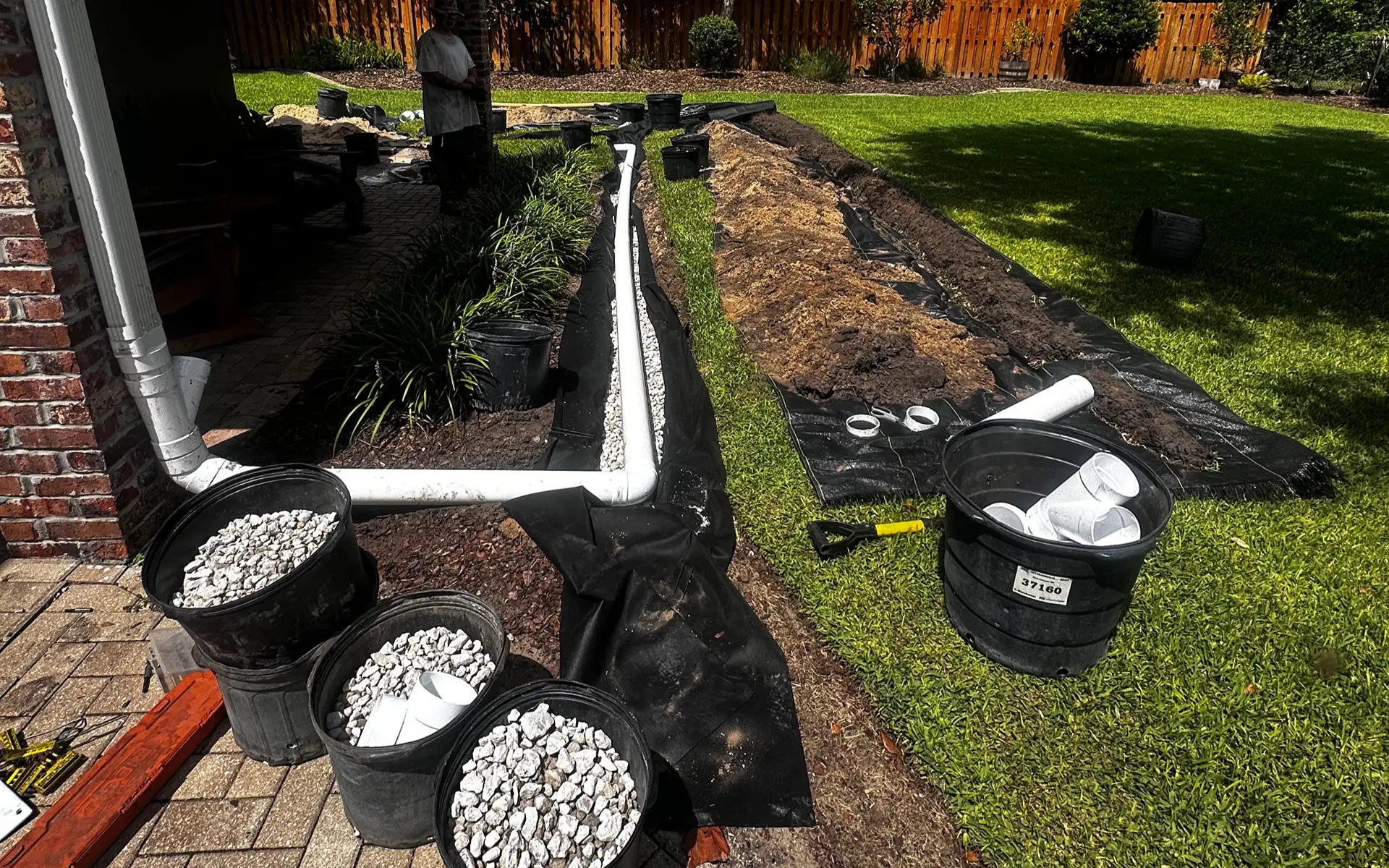
Downspout Drainage Installation in DeLand, FL
Is rainwater from your gutters flooding your yard, washing away soil, or collecting beside your foundation? We install underground downspout drainage systems that redirect roof runoff away from problem areas.
From a single troublesome downspout to multiple homes draining into the same yard, Tree of Life Landscape & Design helps Central Florida homeowners manage where their rainwater goes.
Tell Us Where the Water Is Going
Describe your runoff problem and where your property is located.
Your Downspouts May Be Causing More Trouble Than You Think
Gutters collect rainwater from your roof, but downspouts often release that water right beside the house. During a Florida downpour, a surprising amount of runoff can end up concentrated in one small area.
Grass That Stays Wet for Days
Your lawn remains soft, muddy, or waterlogged long after the rain has stopped, especially along the side of your house.
Water Collecting Beside the House
Downspouts discharge near exterior walls, allowing water to accumulate where you would rather keep it away.
Mulch and Soil Washing Away
Concentrated roof runoff cuts through planting beds, moves decorative rock, and leaves channels in the soil.
Water Trapped Between Homes
Multiple downspouts release water into a narrow side yard, leaving little room for it to spread or drain naturally.
Adding more soil or replacing the grass won't necessarily fix the problem. If roof runoff continues to empty into the same area, the underlying drainage issue remains.
Get Help With Roof RunoffMove Roof Runoff Underground Instead of Across Your Lawn
An underground downspout drain connects to your gutter system and carries collected rainwater through buried piping to a suitable discharge location. The goal is to keep concentrated roof runoff from repeatedly soaking the same problem area.
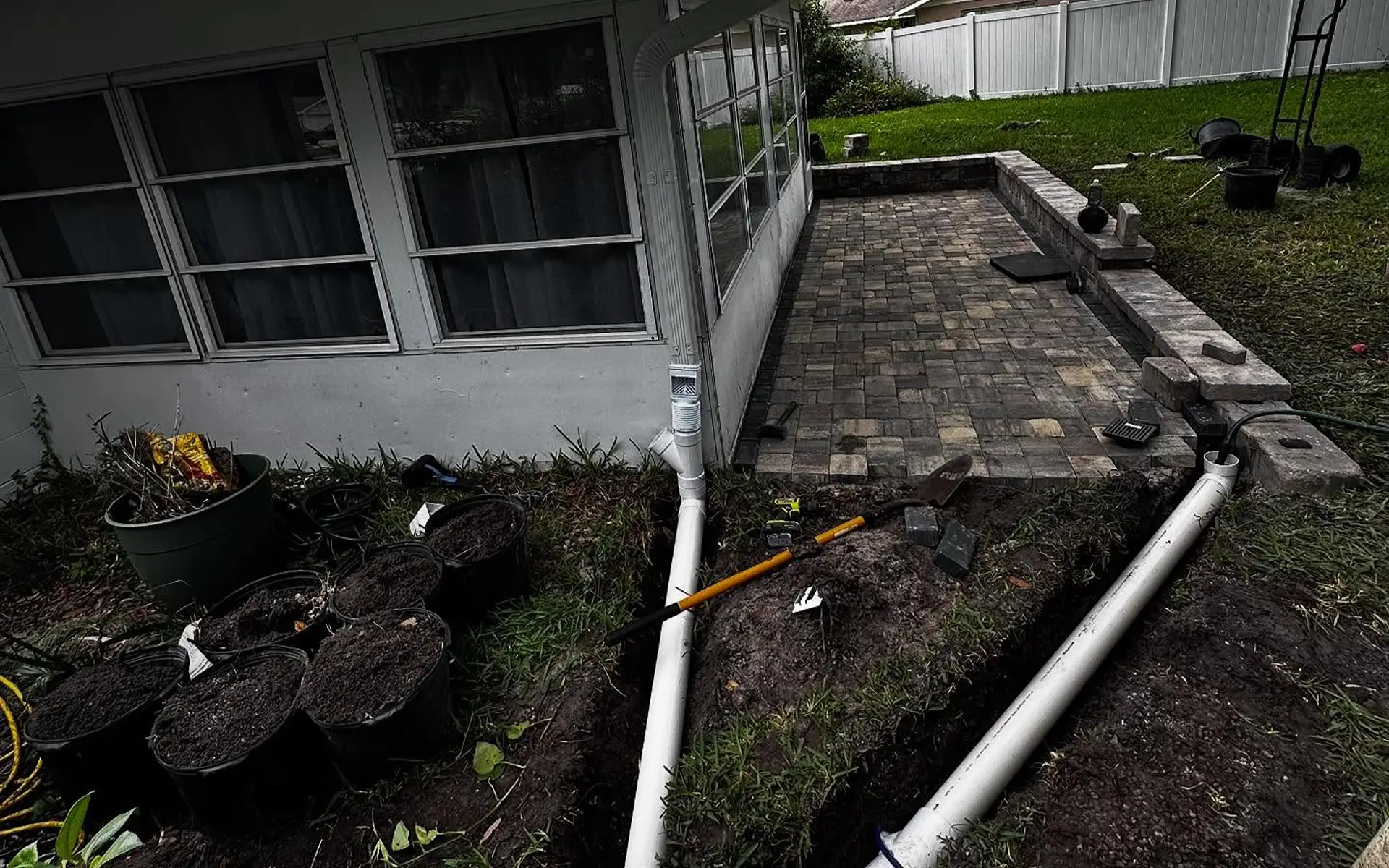 DOWN SPOUT CONNECTION DURING PATIO CONSTRUCTION
Collect Water at the Downspout
We connect the roof drainage to a planned underground system, rather than allowing water to discharge directly beside the house.
Route It Through Buried Piping
The pipe route is selected based on the property's slope, existing landscaping, obstacles, and available discharge options.
Discharge Where Conditions Allow
Water is directed toward an appropriate outlet or other designed drainage feature. The discharge must suit the site and applicable requirements.
Keep the System Accessible
We consider maintenance access and the need to clear leaves, sediment, and other debris from drainage components.
Planning a new patio or landscape project? That's a good time to address gutter runoff. Downspout drainage can be planned alongside the new installation rather than becoming a problem after the work is complete.
Six Downspouts. One Constantly Soggy Side Yard.
See how redirecting roof runoff made a major difference between two homes.
Redirecting Roof Water From Between Two Houses
Two neighboring DeLand homeowners were dealing with a narrow strip of lawn that stayed soggy for days after rainfall. The grass was mushy, with standing water collecting in several places.
Both houses had three gutter downspouts releasing water into the same confined space. That meant runoff from six downspouts was repeatedly flooding the area between the homes.
According to Michael's project report, redirecting the downspout runoff eliminated approximately 80% of the water entering this area, allowing faster drying and reducing muddy conditions.
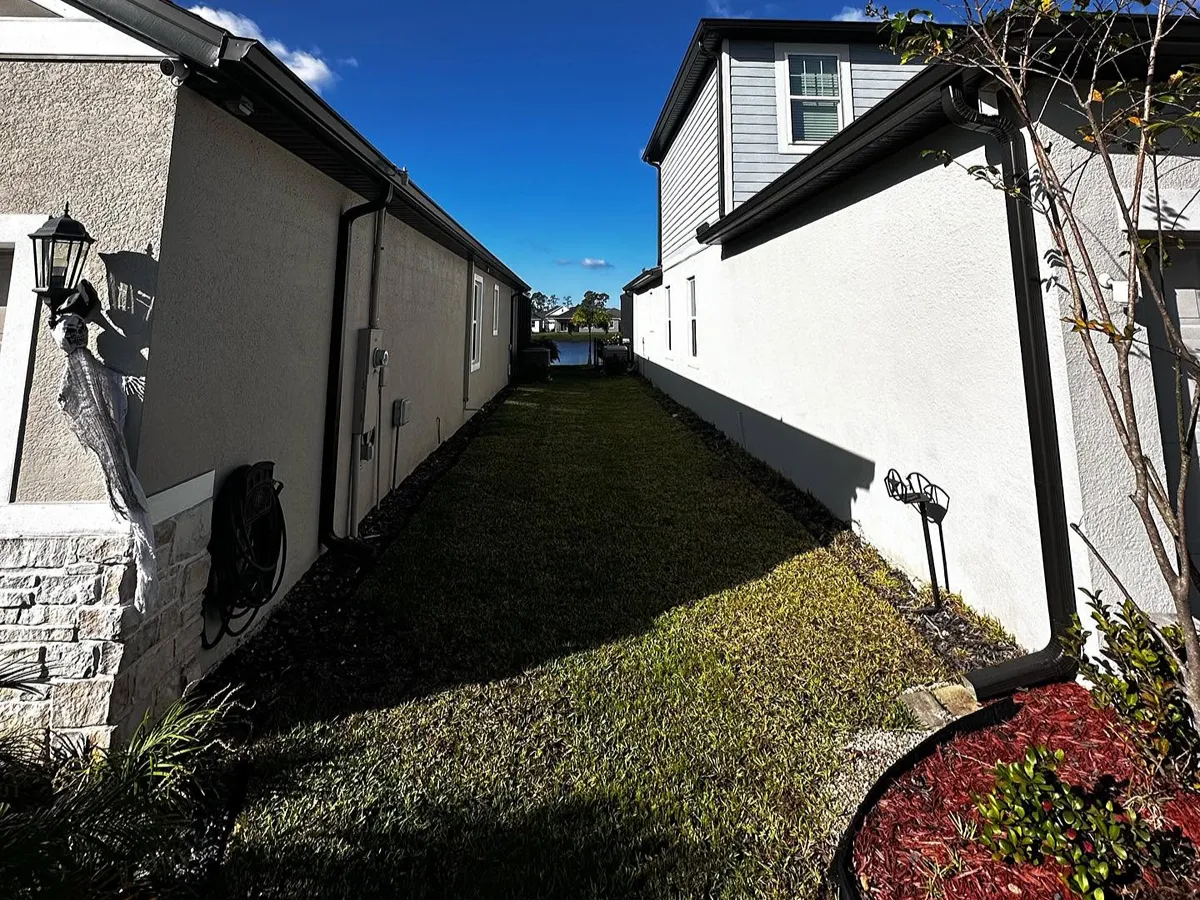
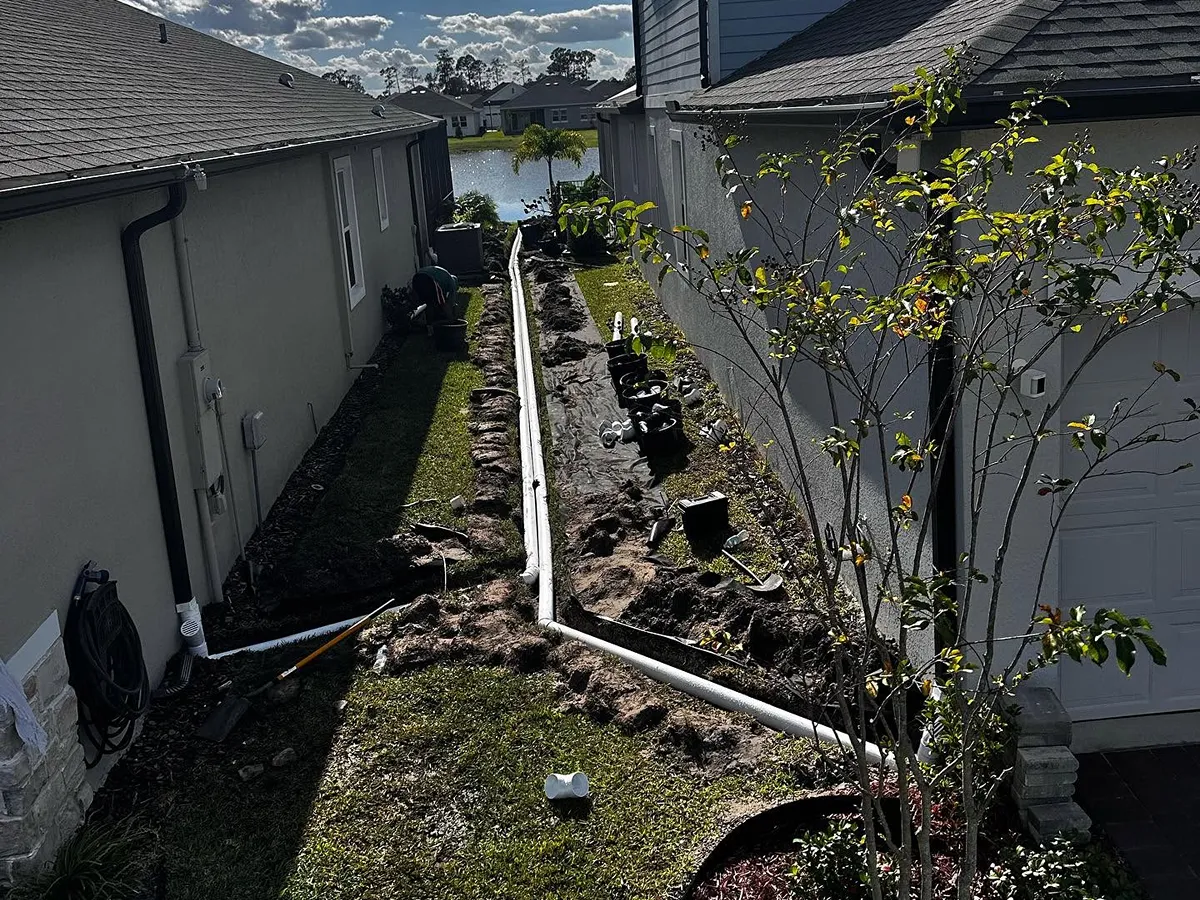 ACTUAL TREE OF LIFE INSTALLATION
Building a New Patio? Don't Forget the Downspouts.
A new patio can change how rainwater moves through your yard. If the existing gutter downspouts still discharge beside the house, that water may end up flowing over the new paving or collecting along its edges.
This installation shows a downspout being tied into an underground drainage system during patio construction. Planning this connection as part of the project helps account for roof runoff before the finished surface is in place.
Where Can All That Roof Water Actually Go?
Burying a pipe isn't enough by itself. The drainage system needs a suitable route and discharge location. That's especially important when neighboring properties, flat terrain, or poorly draining soil limit the options.
Property Slope
Gravity drainage depends on having a workable elevation difference between the downspout and the outlet.
Soil & Saturation
Some soils absorb water slowly, especially when already saturated. We consider these conditions when choosing a system.
Existing Landscaping
Walkways, patios, irrigation, planting beds, and utilities can affect where drainage piping can be installed.
Appropriate Outlets
Water must be discharged responsibly. A proposed outlet must be suitable for the property and comply with applicable local requirements.
What if the yard is flat? Some properties require a different approach, potentially involving collection basins, subsurface storage, or other drainage measures. We assess the available options rather than assuming one system fits every yard.
Underground Drainage Without Treating Your Yard Like a Construction Dump
Installing buried drainage requires excavation, but that doesn't mean the surrounding lawn and landscaping should be treated carelessly. Our crews take steps to protect the work area and restore disturbed sections once installation is complete.
Restoration depends on the original site conditions and the work required.
Discuss Your Project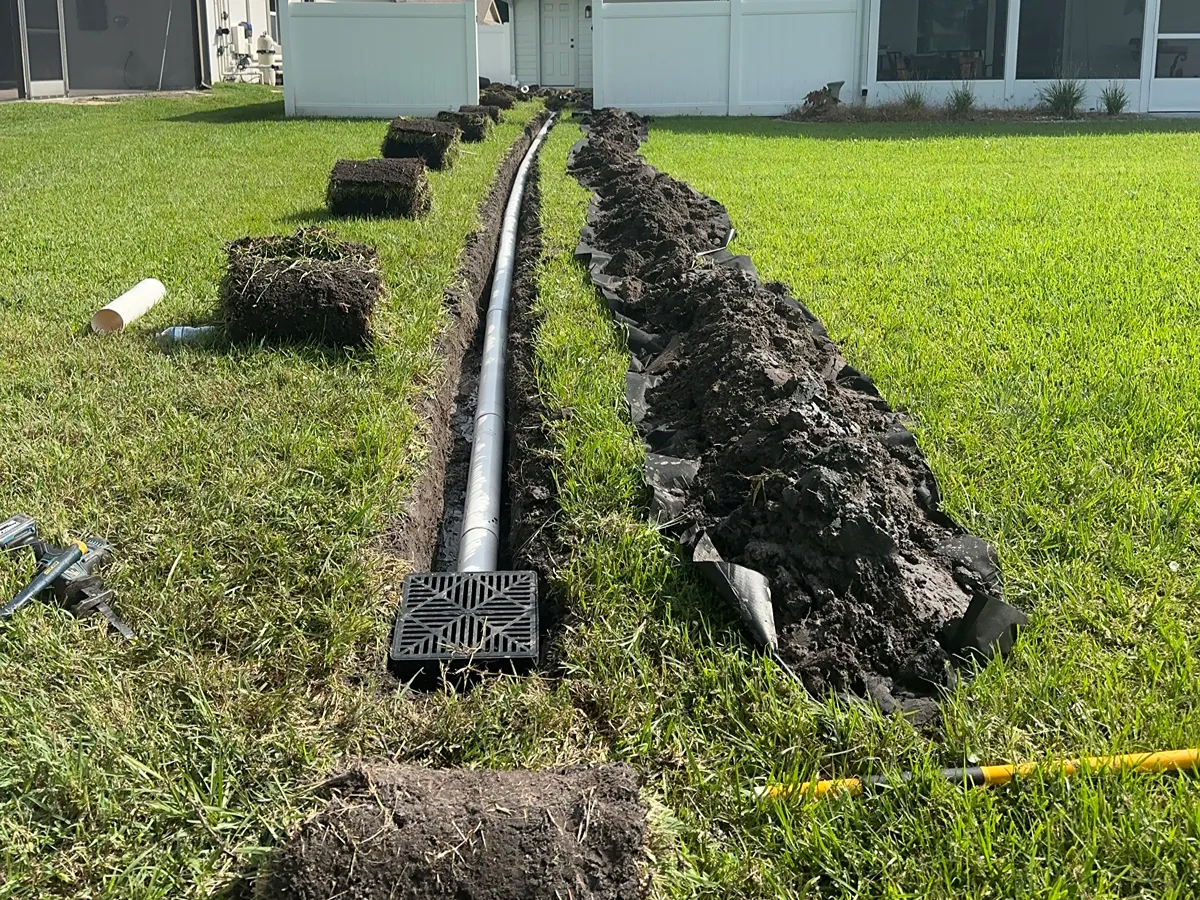 ACTUAL DRAINAGE INSTALLATION
What Homeowners Say About Working With Tree of Life
Downspout Drainage Across DeLand & Central Florida
Tree of Life Landscape & Design installs drainage systems for homeowners throughout Volusia County and surrounding communities. Our DeLand project between two neighboring homes is one example of the roof runoff problems we address.
Have a drainage problem outside these communities? Contact us with your property address.
Explore Our Service AreaQuestions About Buried Downspout Drains
Can you bury my existing gutter downspouts?
Existing downspouts can often be connected to underground drainage piping. We first need to assess the available slope, pipe route, and suitable discharge location.
Will underground downspout drains fix my soggy side yard?
They may help significantly when concentrated roof runoff is a major source of the problem. Other factors, including soil conditions and surface grading, may also contribute. We evaluate the source before recommending a system.
Where does the water go after it enters the underground pipe?
The water is directed toward a suitable discharge location or designed drainage feature. The correct outlet depends on your property's slope, layout, soil conditions, and applicable rules.
What if my backyard is completely flat?
Gravity drainage can be challenging when there isn't enough elevation difference. Other approaches may be considered depending on the property, available outlets, and soil conditions.
Can multiple downspouts connect to one drainage system?
Yes, multiple downspouts can sometimes be connected to a properly designed system. Pipe capacity, contributing roof area, slope, and discharge conditions all need to be considered.
Will installing the drainage damage my lawn?
Underground drainage requires excavation. Our crews take care when removing sod, handling excavated soil, and restoring affected areas. The extent of disturbance depends on the installation and site conditions.
Can downspout drainage be installed before a new patio?
Yes. Planning underground downspout connections during patio construction can be beneficial because the drainage route can be coordinated with the finished surface and grading.
How much does underground downspout drainage cost?
Pricing depends on the number of downspouts, trench length, pipe routing, excavation conditions, available outlet, and restoration requirements. We assess the property before preparing an estimate.
Tired of a Muddy Yard Every Time It Rains?
Tell us where your downspouts discharge and what's happening when it rains. We'll help determine whether an underground drainage system is the right approach for your property.